There’s a lot to love about magical Norway. One of the most unique parts about a trip to this Scandinavian country is that you can freely camp just about anywhere (as long as you follow a few rules). The right to roam, or the right of access (allemannsretten), is a traditional part of Norwegian culture, and you can camp in the wild for free. Being able to wake up and breathe in the fresh morning air without a soul in sight is truly a special experience.
In August, a friend and I spent four nights camping in and around Hardangervidda National Park. While both of us love the Bavarian nature, the rules are quite strict when it comes to camping there. For example, you can only stay outside in a tent at designated (and often really crowded) spots. The idea of having so much unlimited access to nature and being able to just set our tent up after a long day of hiking sounded romantic and unreal. It makes me smile just thinking about it. However, not everything went exactly as planned during our trip.
Read on for tips (some of which we learned through trial and error), how to find beautiful camping spots in Norway, and more about the experience.

Rules for Camping in Norway
But first, here are some important rules to keep in mind about wild camping in Norway:
- Always respect the nature and animals, and leave the landscape as you found it.
- Your campsite should be at least 150 meters away from the nearest house or cabin. You can’t stay on someone’s front yard or right next to a business, for example.
- If you want to stay for more than two nights in the same spot, you’ll need to ask the landowners for permission. You don’t need to worry about this rule if you’re camping in the mountains or other remote areas.
- Empty your toilet at the signposted areas. (Our camping spots were luckily close to outdoor toilets in the park, so we didn’t need to worry about this one).
- Campfires in and around forests are banned between April 15 and September 15.
Arriving in Bergen
We went into the trip with, admittedly, not much of a plan. We knew we wanted to do a couple of hiking trails and camp in Hardangervidda National Park, but we didn’t have a specific spot in mind for the first night. You could say that we were just kind of winging it. I am a fan of this type of non-plan, but it was also a little interesting arriving in a different country and not having a set place to sleep for the night.
We flew into Bergen Airport, rented a car, and spent the next couple of hours gathering food, water, and some other camping supplies that we couldn’t bring with us from Munich. Bergen has some nice outdoor supply stores, and we were able to find everything we needed, including gas for our little camp stove and a sleeping pad. The last thing on the list? Eat some delicious Chinese food, aka our last meal in civilization, and then say goodbye to Bergen.
The drive to the national park took us through some beautiful landscapes, and it was hard to focus on driving with the fjords surrounding us. While the drive was beautiful, our enthusiasm started to wane after a couple of hours when the sun started to set. We still didn’t know where we were sleeping, and we weren’t sure where to park or where exactly we could camp. It was definitely not as romantic as it was in my imagination.
When we got close to the park, we turned off a random winding side road and found an empty field. It was not the most beautiful spot and we weren’t sure if it was someone’s property. However, it was pretty dark at this point and we were tired and ready to settle down for the night. So, we decided to set up camp in what felt like a random driveway next to a big field. We set the alarm for 6 a.m. so that we could get a move on in the morning and not be woken up by an annoyed farmer. In spite of the uncertainty and doubts, it was pretty magical falling asleep under the full moon.
In hindsight, I think we should have managed our time more wisely and gotten to the park with enough daylight and time to find a camping spot on the hiking trail. That said, it was definitely an adventure.
Camping Next to a Waterfall
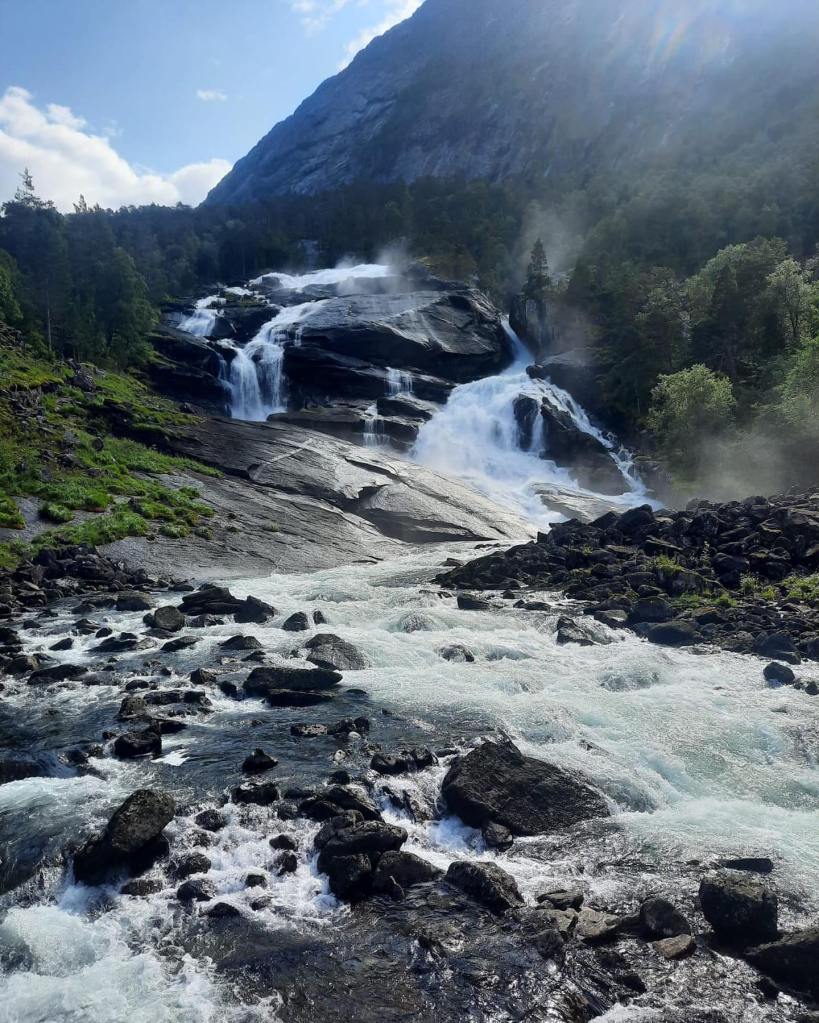
Luckily, things got better the next day. We woke up, feeling refreshed and well-rested despite our awkward camping spot, and made our way to the start of a waterfall hiking trail in the national park, called Husedalen valley. Apparently, it’s known as one of the most beautiful hikes in Norway. There are four waterfalls along the trail, which takes about 5-6 hours to reach the top.
After parking in the lot at the start of the trail, we pulled on our heavy backpacks, loaded with food, water, and our sleeping essentials, and started hiking. Finally, the trip was really starting!
The trail offered beautiful, pristine nature, and it wasn’t crowded at all. I think we saw a few other hikers, but for most of the way up it was just us and the nature. It was definitely a world away from the busy hiking trails I’ve experienced in Bavaria and British Columbia.
After hiking for a while, we managed to find the perfect camping spot next to one of the waterfalls. It was an open field with a gurgling steam running past. Since it was out of the way of the trail, it felt like our own private little paradise. Pleased with our accommodations for the night, we ran around like free little kids, splashing in the stream and marveling at the vibrant, green plants. It was a place to make you believe in fairies, magic, and other nice things. I even did the splits for the first time here (after months of practice).
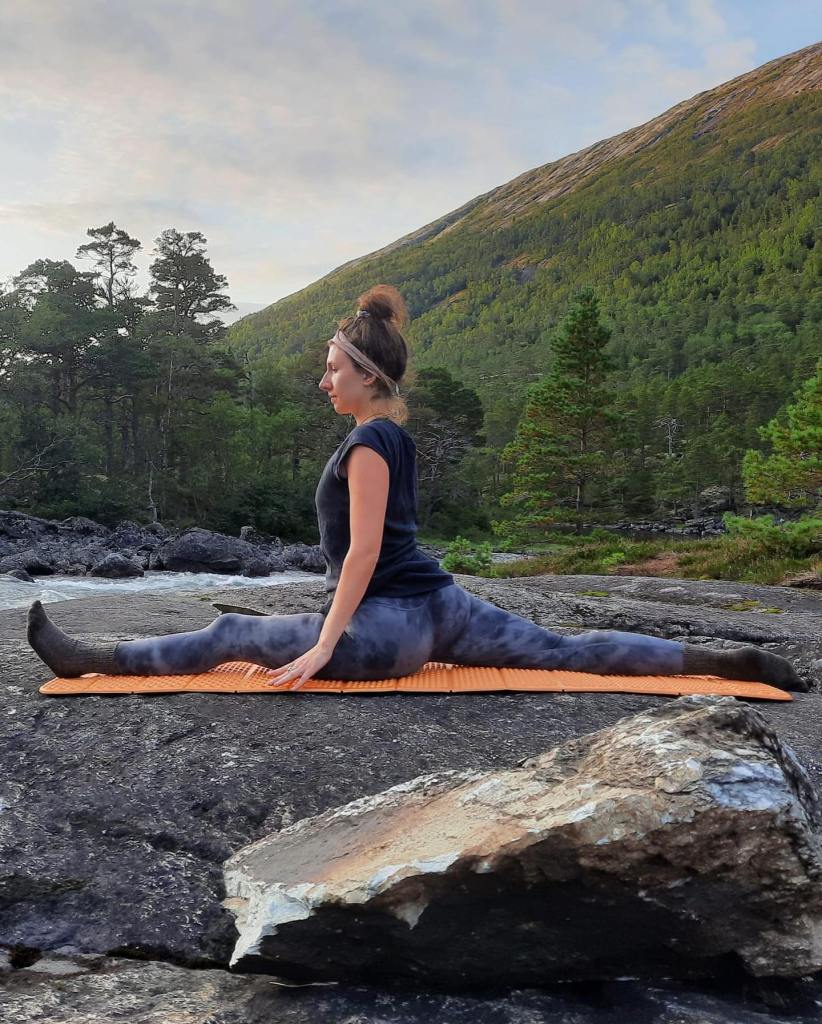
This experience showed us that finding the best wild camping spots in Norway may come down to making sure you have enough time (and daylight) to explore a hiking trail or area well. There’s also a little bit of luck involved. That said, it’s easy enough to find a nice, flat place to spend the night once you’re on the trail.
Hiking HM Queen Sonia’s Trail
In the morning, we hiked back down to the car and sadly left the magical spot behind. Our next stop? HM Queen Sonia’s hiking trail, also known as Dronningstien, another popular trail in the park. We grabbed a quick cappuccino at a cute cafe in Kinsarvik, the nearby village, which felt like an incredible luxury, and drove to the parking lot at the base of the trail. It was time to load up our packs again with water, food, and everything else we would need for the next two days. While Dronningstein is doable as a day hike, we had decided to break it into two days so that we could take our time and find a nice camping spot along the way.
While I felt a bit like a pack mule, it felt nice to be hiking. We were lucky to have nice sunny weather, and I started the hike in shorts and a T-shirt. We didn’t see a single person on our way up, but we did see a vending machine with water and other drinks.
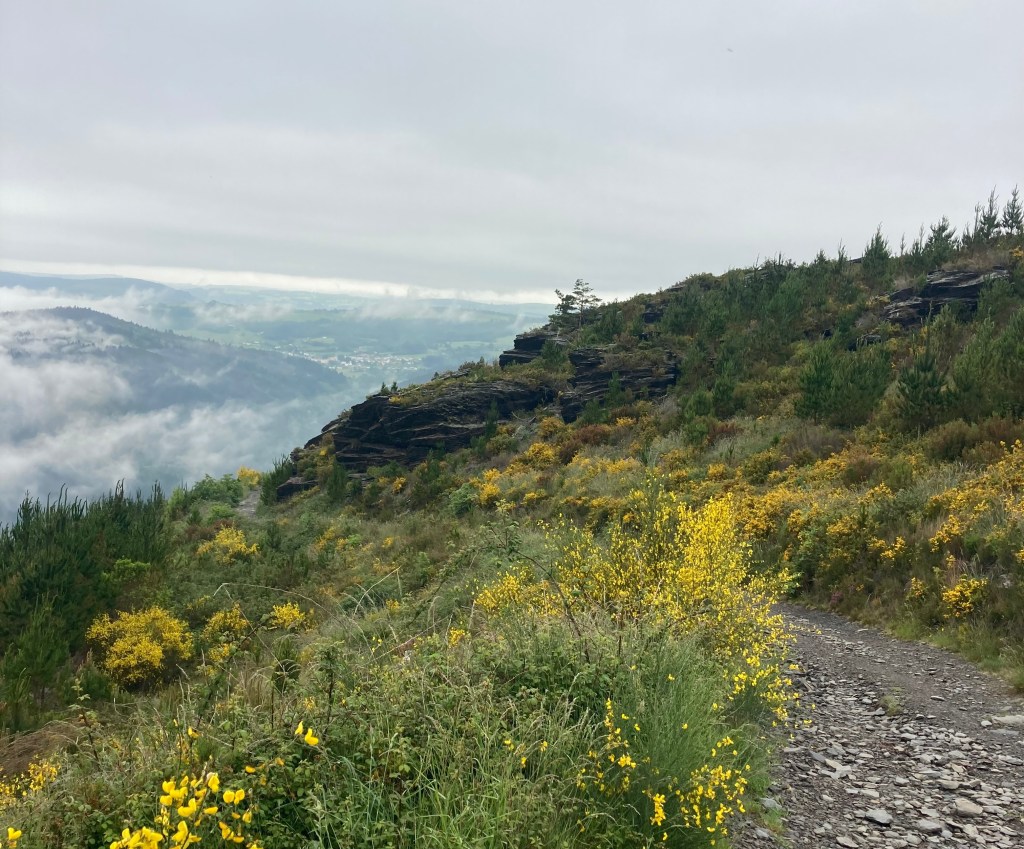
The trail itself was quite muddy and steep at the beginning as it wound through the forest, but it eventually leveled off after reaching the mountain plateau. The landscape felt completely different from the waterfall hike the day before, with lots of stones, small lakes, and panoramic views of the Sørfjorden. We even spotted some wild goats!
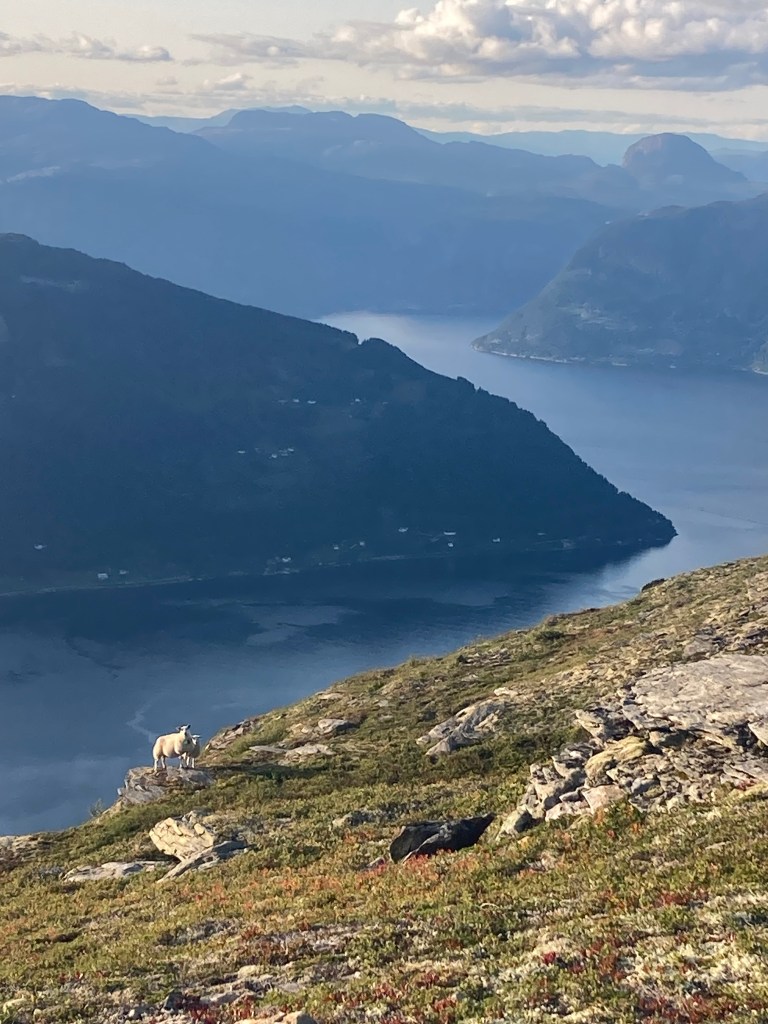
When it started to get dark, we found a camping spot a bit off the trail with incredible views. There were lots of flat areas to choose from. The sunny day had turned into a cold evening, and we put on all our warm layers as we set up camp on what felt like the top of the world. Dinner was a cup of instant noodles, tomato cheese toasts, and tea, thanks to our trusty gas burner. It’s true that food tastes better when camping.

We woke up early, cozy and warm in our sleeping bags, but unfortunately we couldn’t stay in them for long before going outside into the chilly morning. We started our day with coffee and some fruit, trying to soak in the solitude and beauty around us. Not to sound cheesy, but moments like this don’t come often in life, and I really appreciated the chance to feel connected to nature.
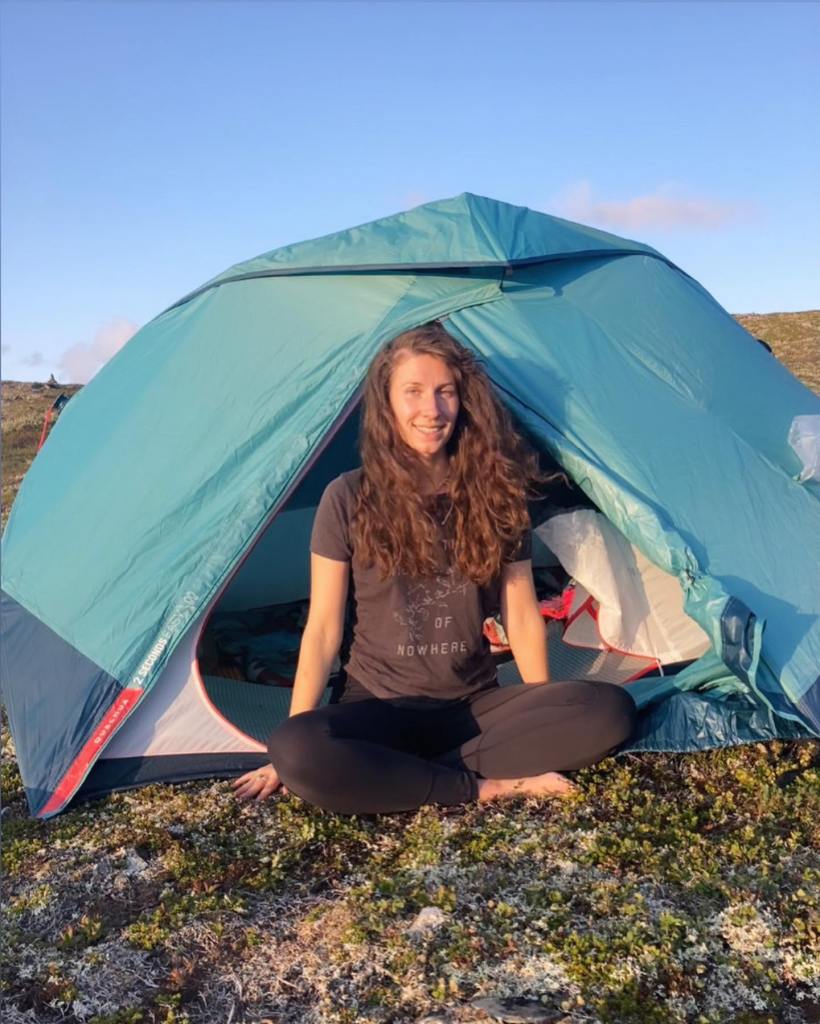
Eventually, we gathered up our stuff and packed our bags once again, ready to complete the second half of the hike and head back down to the busy world below. The clouds had rolled in, and it felt like we were inside of them as we continued walking along the trail.

After making our way back down, we needed to drink some water, which we were running short on. Then, we waited over an hour for a bus back to Kinsarvik. At one point, we weren’t sure if the bus was coming. There is a shuttle bus between the two towns for hikers, but the service didn’t pick up when we called them. If possible, it’s probably best to book your ride ahead of time. (We learned this the hard way). Anyways, after a long wait the bus thankfully appeared around the corner and then dropped us off in Kinsarvik. From there, it was just one more walk up to the parking lot where we had left the car. Phew!
Since the hike had taken most of the day, we decided just to spend our last night at a camping site next to town. While camping at the site wasn’t as special as the previous nights, it was affordable and offered a nice view of the fjords. Plus, I was able to take my first shower of the trip, which felt amazing! (Although, I had kind of preferred waking up with a dip in the ice-cold stream). We feasted on another gourmet meal, which consisted of pasta, bread, and trail mix, and then it was lights out.
Waking up in the morning felt bittersweet. It was our last day, and pretty soon we would have to head back to the Bergen airport. However, the nice, mild weather we’d enjoyed during our trip had turned into a pretty miserable gray and rainy day, so it was probably a good time to leave. We packed up our campsite one last time, and then it was goodbye Norway.
After this experience, I’m looking forward to planning longer camping trips and hikes, as well as exploring other national parks in Norway. If you’re thinking about planning a camping trip to Norway, I would definitely recommend it! With some preparation, it’s possible to get up close and personal with Norway’s natural beauty.


 Home Far Away From Home
Leave a comment