In Dr. Seuss’ classic story, The Lorax, a young boy wanders to the far edge of his polluted town to visit a mysterious figure, known as the “Once-ler.” The Once-ler tells him that the town was not always in such a degraded state. Once upon a time, it was an abundant valley filled with colorful animals that frolicked amongst the Truffula trees, a place reminiscent of the Garden of Eden.
The Once-ler found himself enchanted by these trees, and had the idea to cut them down and turn their wool into something called a “Thneed.” He built a factory and his business expanded rapidly. However, when he cut down the trees, the Lorax appeared. The Lorax spoke for the trees, since they “have no tongues”, warning the Once-ler of the consequences of cutting down the Truffulas. Of course, the Once-ler did not listen. (Do they ever?)
Gradually, the animals either starved or died from the toxic waste in the ponds. The ones that survived left to find somewhere else to live. When the last Truffula tree was cut down, the Lorax left, and the Once-ler’s business had no more raw materials. His factory shut down, and the town became empty and polluted.
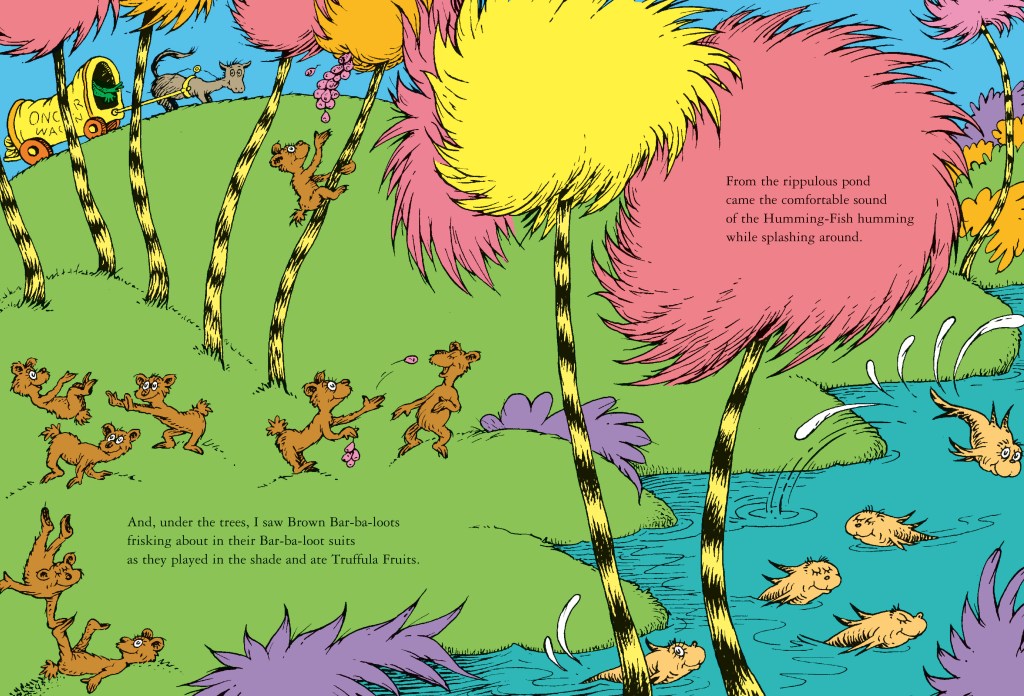
The Lorax left behind one thing: A stone slab with the word “Unless” carved into it. The Once-ler takes this to mean that unless someone cares, the place will not get any better. He gives the last Truffula seed to the young boy and asks him to plant it. Maybe, just maybe, the Lorax and the happy animals will come back.
As a child, I loved this story and wanted nothing more than to rest in the wooly canopy of a Truffula tree. I think the book really helps foster a connection to the earth (trees are so cool!) and responsibility for our role in keeping it healthy. (To think, it was banned in California in the 1980s due to its negative portrayal of the logging industry). At the present moment, with governments failing to hear the call of the Lorax and deprioritizing climate change, we need stories like this more than ever. If the planet we live in is unhealthy, then so are we. I know how easy it is to just keep living business as usual, but if we continue extractive practices towards the land (and ourselves), we will collectively suffer. Unless we start caring.
There are many ways to personally get involved and take action to give back to our planet. One option is to participate in an Ecosystem Regeneration Camp. I was able to join a week-long camp in Portugal’s beautiful Lama Valley, and would like to share the positive impact of the experience. Hopefully, you’re inspired to attend one yourself!
What Are Ecosystem Regeneration Camps?
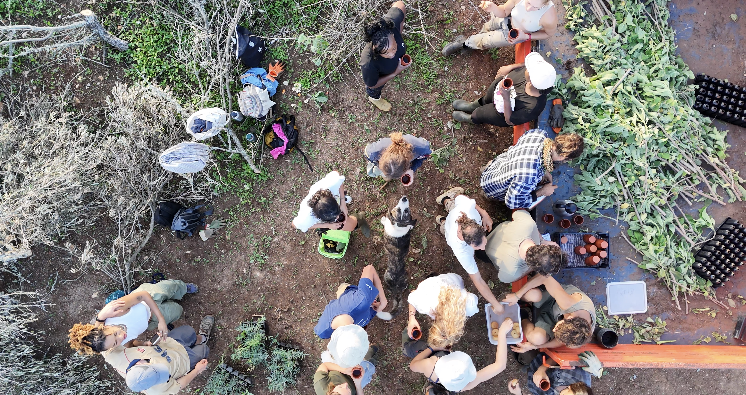
Simply put, Ecosystem Regeneration Camps, similar to Ecosystem Restoration Camps, are a movement of different organizations and people around the world coming together in an effort to heal degraded lands and broken ecosystems. Every camp is different, but the focus is the same: joining together as a community to regenerate the land.
Typically, participants camp on the land and spend the day learning about agroforestry, permaculture, and similar topics. Agroforestry, such as a food forest system, is essentially agriculture incorporating trees, which mimics natural systems and helps get to a place of balanced abundance. The knowledge is then put into practical use by working in the field planting trees, making biofertilizer, and other hands-on activities. You’ll definitely get your hands a little dirty.
As an example of the positive impact these camps can have, Camp Altiplano in Spain was a degraded cereal field depleted by deforestation and industrial agriculture. However, since regeneration efforts began in 2017, it has transformed into a place of life with rich biodiversity. Thanks to the efforts of over 2,000 people, 20,000 native trees have been planted and the camp had its first almond harvest in 2022.
You can volunteer at camps all over the world, for different lengths of time. If you want to learn more about some of the ongoing projects and get involved, check out the Ecosystem Restoration Communities website.
My Experience at an Ecosystem Regeneration Camp in Portugal
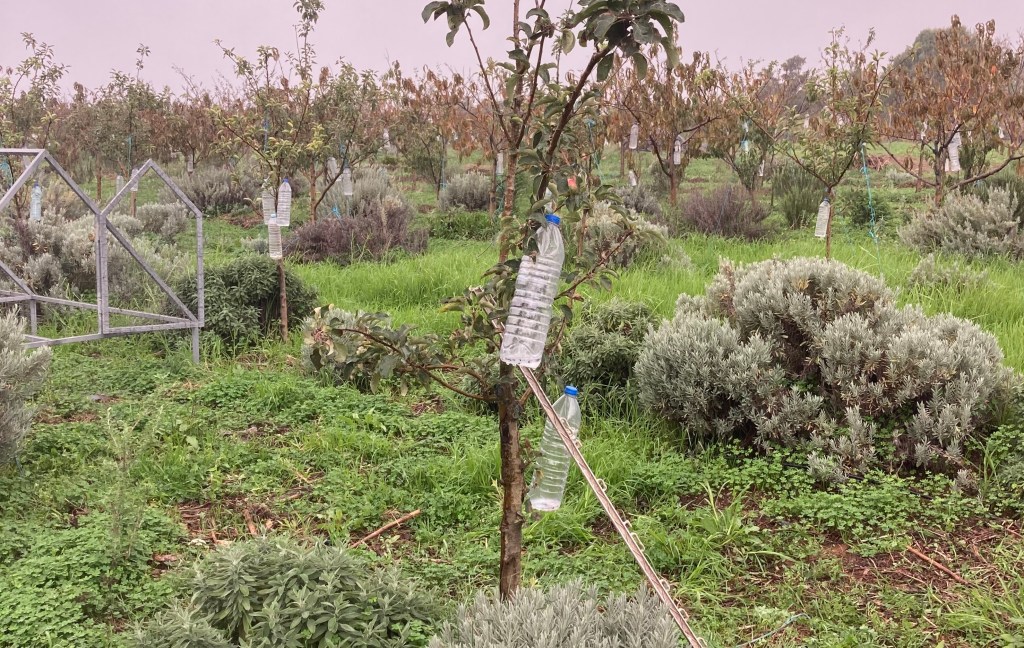
In November 2024, I attended the Ecosystem Regeneration Camp jointly run by Quinta Vale da Lama farm, Novas Descobertas Associationção, Mud Valley Institute, and RLA. It’s a week-long camp in southwestern Portugal that is open to anyone interested in learning more about agroforestry and ecological regeneration practices.
Before attending the camp, I wasn’t really sure what to expect. Despite a strong appreciation for the natural world and some experience growing vegetables on a rented field plot with friends, I hadn’t taken much direct action to get involved with regeneration and sustainability projects. I had never even planted a tree. While many of the camp’s participants had inspiring backgrounds in permaculture, climate activism, or were actively working to regenerate land, these aren’t required prerequisites for attending.
Quinta Vale da Lama is a 43-hectare farm practicing regenerative agriculture and restoration methodologies to improve soil quality, water availability, and biodiversity. The arid climate in Portugal’s Algarve region means there are ongoing desertification challenges from loss of vegetation cover and soil degradation that require regenerative efforts. In a way, the degraded land in this once-fertile region mirrors the current struggles with many young Portuguese moving away and over-tourism running rampant.

Needless to say, after arriving at the camp, the group soon fell into a natural rhythm. On the first day, we started with a morning circle that took a moment of silence to honor the land and the present moment, all united together for a common purpose. From there, we took a guided tour around the farm and learned more about its various activities. There was also a learning session indoors focused on how humans can create more abundance in their ecosystem. Overall, the training felt very inclusive and welcoming, and was facilitated very well.
The pattern of each day included a morning circle, theoretical learnings, a practical tutorial, and then hands-on application of learning in the field. Our main project was creating a drought-resistant windbreak and water harvest system. This involved working together to plant over 1,000 trees, plants, and bushes within the week. I learned that planting trees isn’t easy. Sometimes, you have to use many tools, get really sweaty, and defeat giant stones in order to make the hole deep enough for your tree. Yelling, “Hole-y shit!” from time to time also helps.
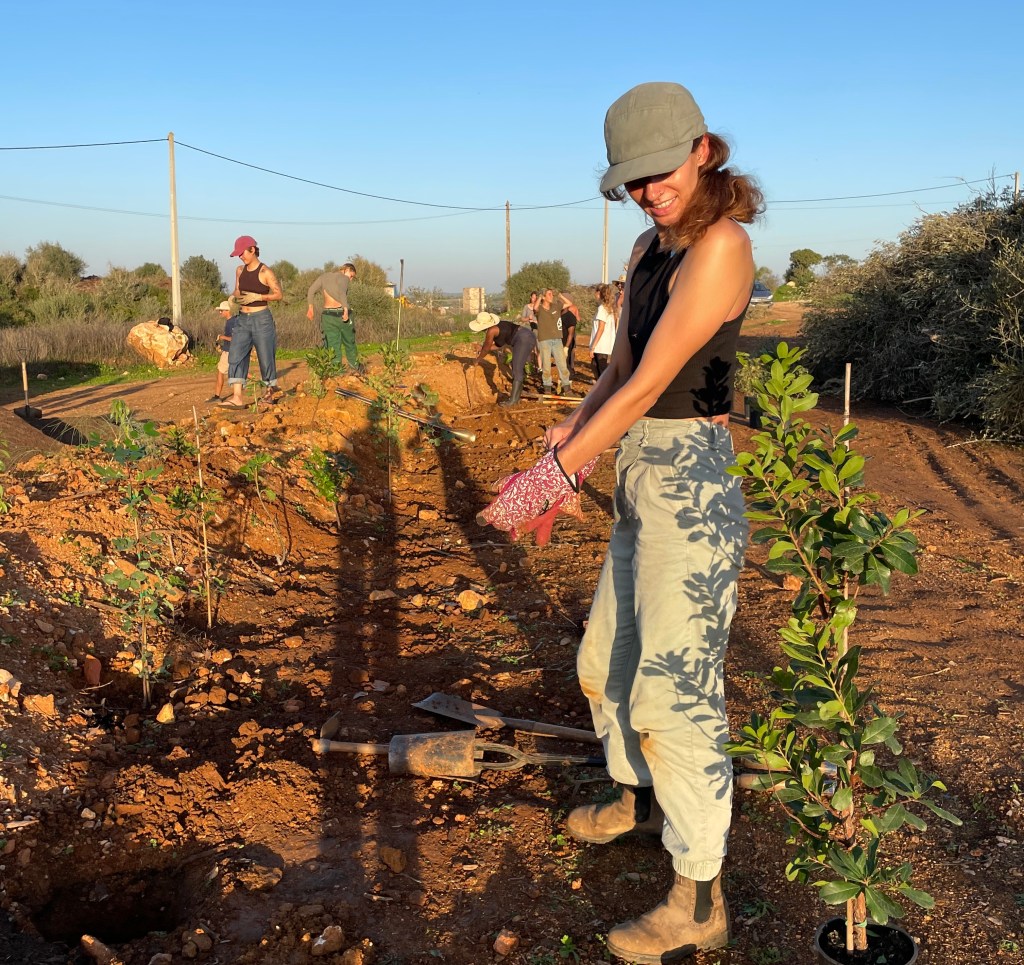
In the days that followed, we got deeper into topics such as regenerative agroforestry, alley cropping, holistic grazing, syntropic agroforestry, wood pastures and fodder, compost, and healthy soils. And our muscles got stronger from more digging. We also had the opportunity to participate in a community roundtable with local residents about working toward a regenerative future for the landscapes and communities of the Algarve.
One topic that interested me was our role as humans within ecosystems. Sometimes, I think it’s easy to feel helpless or not sure if there’s a way to give back to the environment in day-to-day city living. On one morning, we had a group brainstorming session to discuss the question. Some participants wondered if humans even have a role, or if we’re capable of doing anything good for the earth. The good news is that we can be beneficial. Humans can move through land, especially with animals, in a way that respects the lands. We can get involved with urban garden projects, which are active in many cities around the world. We also create edges and disturbances, and our manure makes for good compost. Nature uses disturbances, such as changing seasons, which are always happening, for cycles of regeneration.

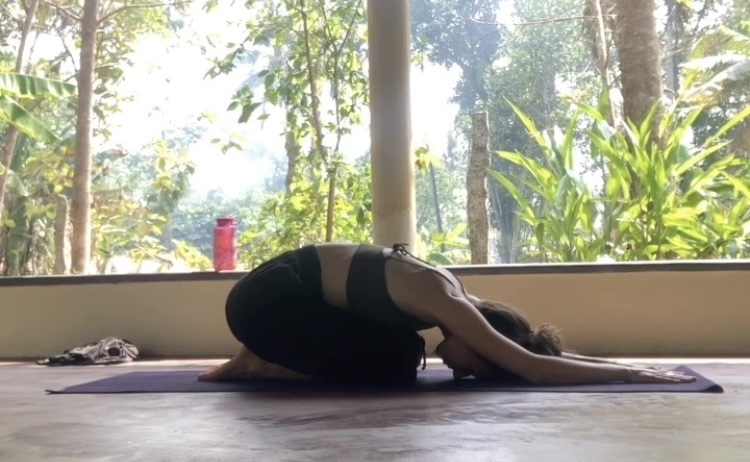
However, the camp itself involved much more than learning about technical agroforestry terms or sweating in the field. Each day involved coming together as a group around a long wooden kitchen table, enjoying delicious home cooked meals, sharing stories, and getting to know each other. Participants gave community contributions, including cleaning the kitchen, toilets (fun), and common spaces. We were also invited to share knowledge and activities outside of the training hours, so members of our group organized a mushroom talk, an environmental documentary screening, yoga classes, games, and an ecstatic dance on the last evening. There was even time for morning beach bike rides and a visit to the local farmer’s market in town.
In the end, I think that principle, that humans can be positive agents for regeneration, is at the heart of the Ecosystem Regeneration Camp experience. By taking the time to learn about how to respectfully be a part of the natural world and taking action to work with the land, we can help restore the balance.

 Home Far Away From Home
Leave a comment