Whether you’re on a spiritual journey à la Eat, Pray, Love or simply looking to deepen your yoga practice in a meditative setting, an ashram stay might be just what you’re looking for. An ashram is a hermitage, monastic community, or other place of religious retreat. In India, there are countless ashrams scattered across the country connected to different lineages and spiritual teachers.
Many visitors to India choose to stay at an ashram during their trip, for both long and short periods of time. These back-to-basic stays often offer a full daily schedule of satsang (devotional chanting), yoga, and meditation practice, making them a nice way to learn about traditional spiritual practices in India in a (mostly) authentic environment.
On my recent trip to India, I spent a week at the Sivananda Neyyar Dam ashram in the southern state of Kerala. This well-known ashram offers regular teacher trainings, Ayurveda Panchakarma treatments, and yoga vacations. While not exactly a vacation in the usual sense of the word, as you’re expected to adhere to a strict schedule that involves waking up before 6am, the yoga vacation was an enjoyable experience and I learned quite a lot during my stay. It definitely catered to Westerners and tourists, but it’s a nice introduction to ashram life.
Keep reading for the highs and lows of staying at an ashram in India, as well as some must-know details for planning your own visit.
Benefits of Staying at an Ashram in India
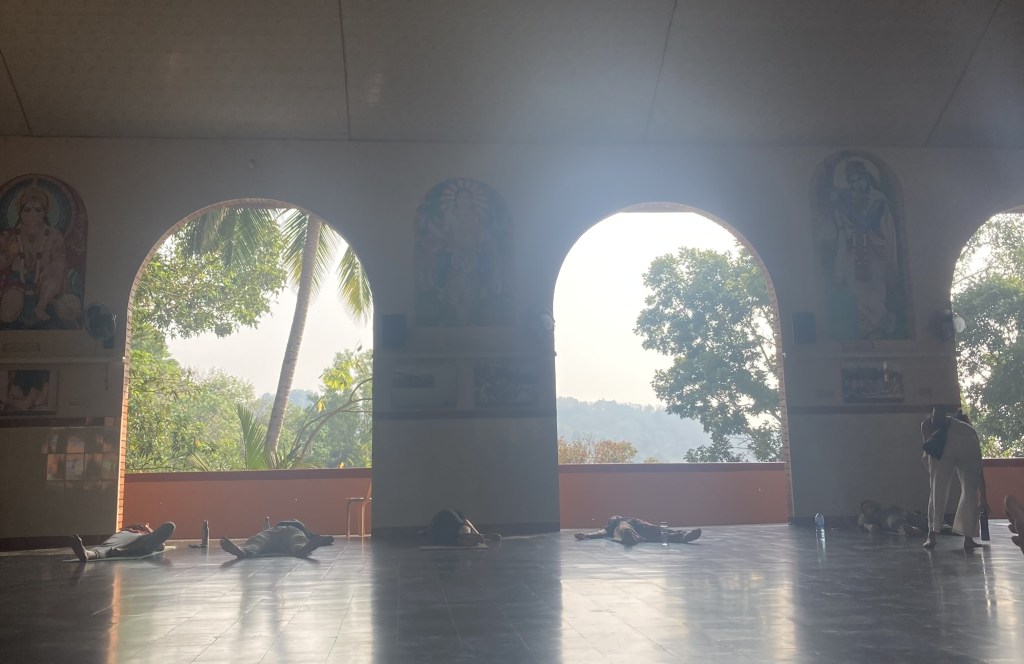
There are many reasons why you may want to spend time at an ashram if you’re traveling to India. Most ashrams offer a peaceful environment away from the hustle and bustle of daily life that’s ideal for going inward and deepening your practice, regardless of your previous experience or skill level as a practitioner. Here are some of the main benefits:
- Learning: Many ashrams offer daily classes on yoga, meditation, and yogic philosophy. You can learn how to perfect your headstand in an asana workshop (like the ones offered at Sivananda Neyyar Dam) or attend a lecture on pranayama, for example. Most ashrams also have a library filled with yogic texts that you can read in your free time.
- Personal growth: In addition to the practical knowledge you’ll gain about yoga and meditation, you’re sure to learn something about yourself and grow. This can be through the practice of karma yoga (selfless service), or just being in the ashram environment and coming into contact with different aspects of your self away from distractions.
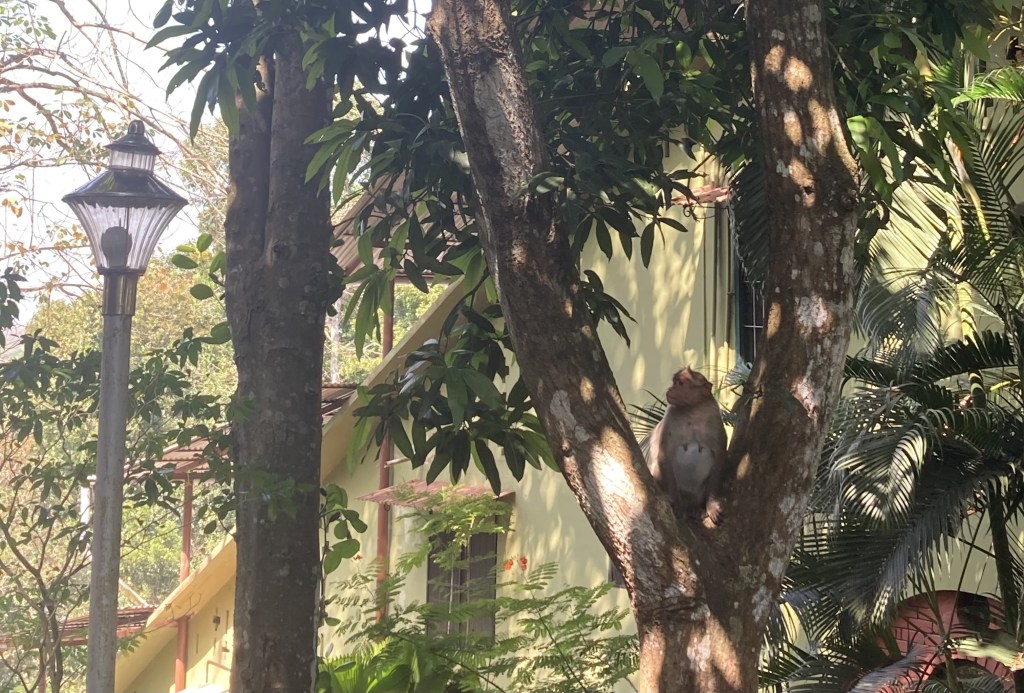
- Connect with nature: A lot of ashrams are located in beautiful natural settings with lush greenery. Sivananda Neyyar Dam is in a secluded tropical wildlife preserve, with playful monkeys swinging between branches and colorful birds hanging around the grassy lawn. Waking up every morning in nature really made me feel grounded and more peaceful.
- Detoxifying: With regular exercise, meditation, mantra chanting, and healthy food, staying at an ashram is good for cleansing the body and soul. In addition, at some ashrams, you can do a Panchakarma detox program to cleanse the body of accumulated toxins and restore energy.
- Go deeper into spirituality: While you don’t have to be religious to stay at an ashram, you will be expected to participate in teachings, practices, and beliefs inspired by Hinduism. For example, you will spend time chanting devotional songs in honor of Hindu deities like Shiva and taking part in ceremonies.
History of the Sivananda Yoga Organization
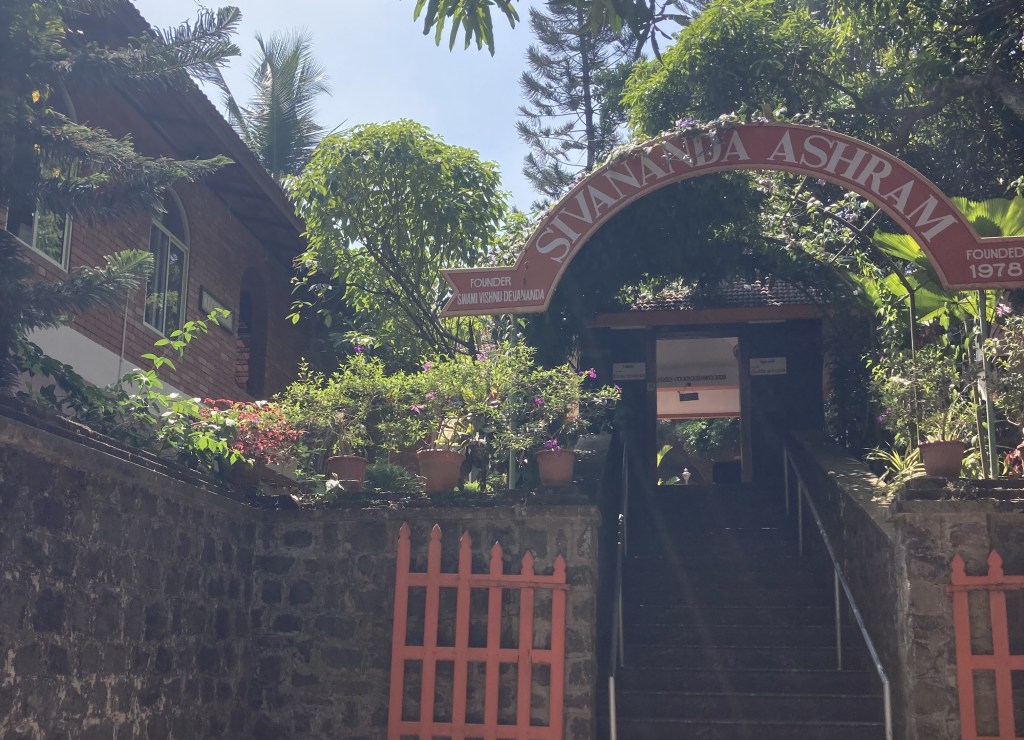
Before getting into daily life at Sivananda Neyyar Dam ashram, here’s a little background on the Sivananda organization. This yoga style has its roots in hatha yoga and ancient traditions and focuses on five main principles: exercise, breathing, relaxation, vegetarian diet, and positive thinking with meditation. It combines practices from rajas, karma, bhakti, and jnana yoga. Since it’s rather gentle and accessible, it’s ideal for beginners.
Born in 1887, Swami Sivananda was an influential Indian medical doctor who came to yoga as an adult. After deciding to renounce the world, he settled in Rishikesh on the banks of the Ganga river and eventually established an ashram in 1936 called The Divine Life Society, which aims to spread spirituality and share cultural practices of India.
However, the Sivananda organization grew in large part thanks to the work of Swami Vishnudevananda. He was a disciple of Swami Sivananda who, under instructions from his teacher, traveled to the West to spread yoga teachings in 1957. From there, the Sivananda organization has grown to become one of the world’s largest and most recognized yoga systems, with centers and schools across the globe. With that said, there have also been some serious allegations made against this organization over the years that are important to be aware of.
A Typical Day at Sivananda Neyyar Dam Ashram

The daily schedule at Sivananda Neyyar Dam is not exactly laid-back. While I did have time to chill on the grassy lawn and sip fresh juices at the Health Hut (a little cafe with delicious fruit, smoothies, and toasts), each day felt intense. A normal day at the ashram will include the following:
6:00am Satsang
7:30am Tea Time
8:00am Asana Class (Beginners & Intermediate)
10:00am Breakfast
11:00am Karma Yoga
11:30am Meditation Class (Optional)
12:30pm Asana Coaching Class (Optional)
1:30pm Tea Time
2:00pm Lecture
3:30pm Asana Class (Beginners & Intermediate)
6:00pm Dinner
8:00pm Satsang
10:30pm Lights Out
My Experience at the Ashram

During my week at the ashram, there were some ups and downs. Not every part of the schedule was my cup of tea, but I gave myself to the experience for the time I was there. After all, it’s not every day one wakes up in an ashram.
The first evening satsang was a unique experience. It felt a bit otherworldly walking through the inky darkness and entering the candlelit main hall for the first time. After finding a place to sit on the floor amidst the crowds of people, the 30 minutes of silent meditation began. We then chanted devotional songs for about 30 minutes, which were listed in a book (my favorite was Shiva Shambho), which built in intensity. We then listened to a short talk on yogic philosophy, which focused on a different topic like love or discipline each evening. From there, it was off to bed.
Other highlights included the giant jungle spider that surprised me in the bathroom at 2 AM, which led to some sleepless nights. My roommate, who worked as a clown in her normal life (so cool!), thought I was dreaming, but it was the size of a plate and very real. Another part of my daily schedule was ensuring the bathroom door was closed and locked at all times so the spider couldn’t migrate into the bedroom. Maybe this is my personal growth.
Most mealtimes included delicious chapati bread, which became my ashram drug of choice. On one day, there was also a short workshop on how to use a neti pot. It ended with groups of people pouring water into their nostrils and spitting out snot together. (Great fun, definitely recommend trying at home!)
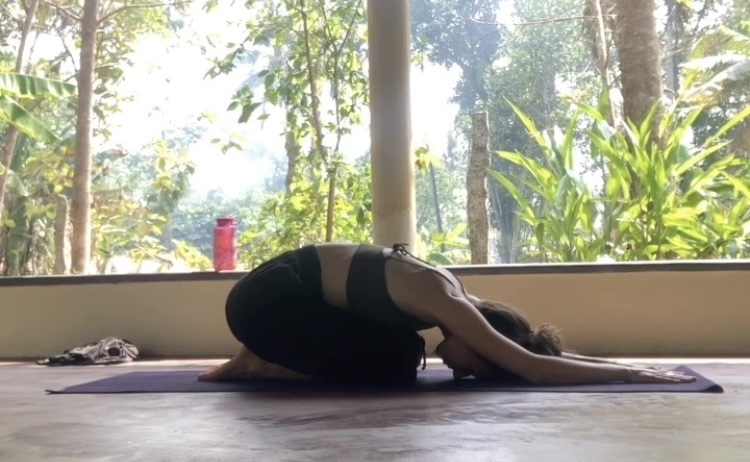
In terms of the asana classes, there were two lessons per day, separated into beginner and intermediate levels. The slower-paced beginner classes focused on the basics, like learning sun salutations and correcting alignment in asanas like cobra and shoulderstand. They were informative and a nice foundation for the intermediate classes, which were faster paced and included more advanced asanas like headstand and peacock (mayurasana). With that said, the Sivananda style includes plenty of rest time in shavasana.
There were also parts of the Neyyar Dam experience that were not for me. For example, I noticed there was an element of performative spirituality in the air from some guests. (I guess this can happen anywhere). In addition, it did feel more like a tourist/Disneyland version of an ashram or a camp course called “Ashram 101”, as almost all guests were Westerners. However, maybe this made it a good introduction. While I’m pretty sure there are more authentic ashrams worth visiting in India, Sivananda Neyyar Dam is a good starting point for the ashram experience.
Other Ashrams to Visit in India
As mentioned, there are countless ashrams in India worth visiting. Each has its own unique offerings, teachings, and style, and it’s worth doing a little research to see which resonates with you the most. Here are just a few of the most popular ones:

 Home Far Away From Home
Leave a comment