Mountains, forests, Scottish hospitaleros in kilts — the Camino Primitivo really has it all. The Primitivo is the oldest route pilgrims used to walk to Santiago de Compostela, first traveled by King Alfonso II of Asturias in the 9th century, and it’s absolutely breathtaking. If the panoramic mountain views don’t leave you speechless, some of the steep ascents are sure to quite literally take your breath away.

While the Primitivo is a shorter Camino route, clocking in at around 311 km, it’s one of the more physically challenging paths in terms of elevation gain. However, you’ll be rewarded with incredible scenery, quaint mountain villages, and serene countryside, plus little to no road walking. The route crosses the Cantabrian Mountains, offering views of the Picos de Europa. I found it to be one of the most beautiful routes I’ve walked, and was charmed by the nature, cows, and peaceful paths met along the way. Pilgrims of all ages and physical abilities were out walking, so don’t let the hills (or potential blisters) scare you away!
If your legs are aching for a little adventure, the Camino Primitivo is a great idea that will keep you active for about two weeks. Between the landscapes, comforting yellow arrows, kind folks, new friends, and café con leches, the experience is sure to fill your cup. Keep reading for an itinerary of the route, what to know before you go, and some other useful tips for your trip. Buen Camino!
Camino Primitivo Itinerary
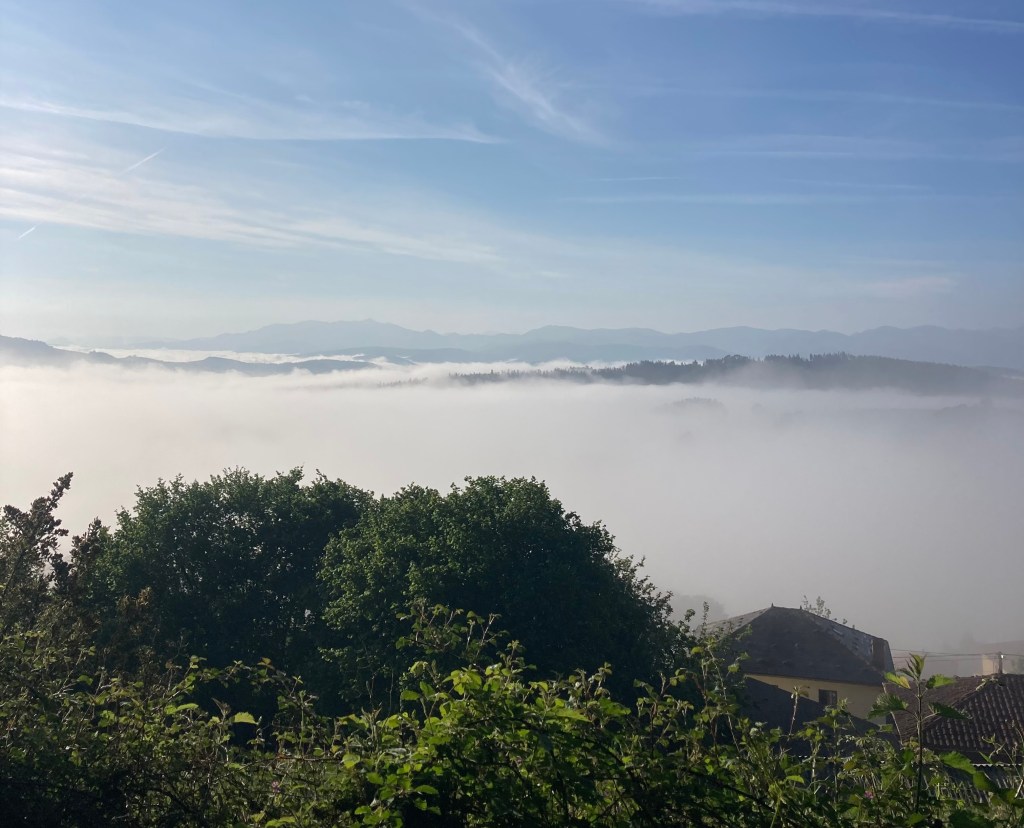
The Camino Primitivo typically takes pilgrims about 11 to 14 days to walk, so it’s best to set aside two weeks of time. Before we get into the itinerary, keep in mind that while the route has a reputation for being quieter than the popular Francés and Portuguese, there are still plenty of pilgrims around. When I walked in May, albergues were fully booked in town most nights, and there were a couple spots where pilgrims had nowhere to stay after a long day of walking. (Looking at you, Grandas de Salime). While you don’t need to worry about booking your trip months in advance (it’s often nicer to have the freedom of no set plan), checking albergues a night or two ahead and calling to book your bed is a good idea. Websites like Gronze make it easy to see albergue options at a glance for every stage.
With that said, let’s jump into an itinerary for the Camino Primitivo!
Day 1: Oviedo to Grado (25,2 km)

The Primitivo begins in Oviedo, Spain, the quaint capital city of Asturias. With plenty of historical sights, including the Oviedo Cathedral, a free art museum, and sculptural art scattered throughout the city, this is a lovely place to spend a day before getting into your Camino groove. (Coincidentally, there’s also an amazing yoga shala right in the city center called Casa del Yoga). Grab some ramen (or whatever food you’re into), as this is the last city until Lugo, about 200 km away.

The first day of the walk will take you into the town of Grado. At around 25 km, it’s not a short day, but it’s relatively flat and will take you past some idyllic countryside. There are a couple of hotels and a private albergue in town, but if you can, try to grab a bed in the public albergue. It’s only 10 EUR for a bed, and it has a well-stocked kitchen and a pair of lovely hospitaleros who cooked us breakfast. I was greeted by a lively Scottish man in a kilt upon arrival, who cheered me and a fellow pilgrim on as we walked up the last hill to the albergue. (Was his name Stu?) In any case, he was full of amusing stories after having walked over 10 caminos himself. When I left, he handed me a sliver of black stone and said it was for courage. I think it helped!
While in town, check out the Asturian cider and its traditional pouring technique!
Day 2: Grado to Bodenaya (~26 km)

The next day will take you out of Grado and into beautiful countryside, with views of the mountains in the distance. There are also some lovely forested trails on this stretch of the route. This particular day was a little difficult to me, as I was adjusting back to walking all day, and I remember gratefully taking off my backpack and sinking into a chair at the first cafe on the walk into Salas.
While the official leg ends in Salas, for a distance of 22.3 km for the day, I would highly recommend walking an extra 4 km past Salas to Bodenaya. This is arguably the best albergue along the Primitivo, run by the most charming of hosts. It’s a donativo, so everything, including the delicious dinner and breakfast, are all donation-based.
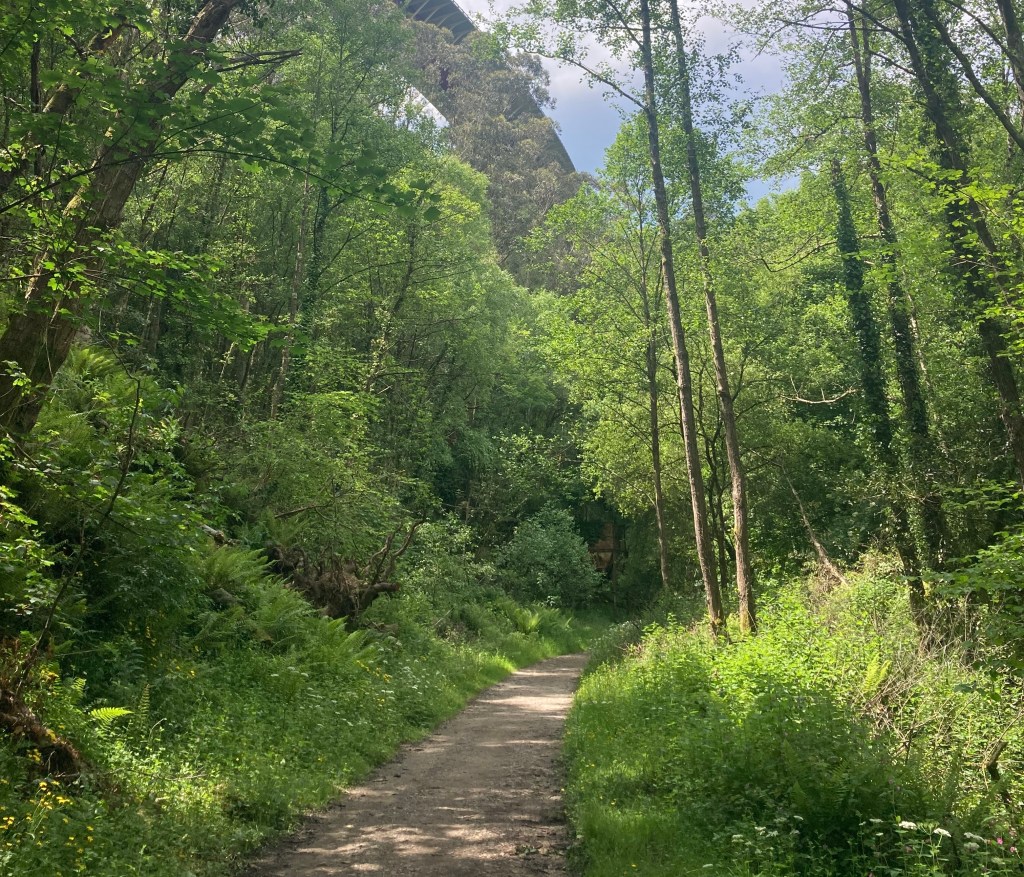
It was raining when I arrived, and Allison and Alberto warmly welcomed me into their cozy home. Inside, there were warm showers, comfortable beds, plenty of blankets, board games, yoga mats, and other nice pilgrims to chat to. Soon, we were all sitting down to eat together. If you stay here, it’s best to book a few days in advance. Also, be sure to ask Allison and Alberto how they met! (Hint: it involves a heartwarming story).
Day 3: Bodenaya to Casa Pascual (~26 km)

The third day begins relatively flat, with a walk through some muddy paths into the cute town of Tineo. (Hiking poles come in handy during this part, if only to make it through the muck). This is a great place to stop for lunch, a coffee, ATM trip, or stock up on snacks at the supermarket. The rest of the walk is pretty rural. There’s also an amazing bakery, called San Antonio, (pictured) right when you’re walking into town.
I stopped with a couple of friendly pilgrims I’d met at Bodenaya, and we enjoyed a break here before tackling the uphill portion of the day. I’d meet them later at Casa Pascual, another charming donativo run by the friendly Sylvia. Unfortunately, I was one of the last to arrive, a side effect of liking to take my time walking, and I ended up with the only bunk bed. Yay! However, the hot shower and amazing dinner definitely made up for it. Sylvia is Italian (and therefore a great cook), and she prepared a lentil soup with fresh herbs and fresh bruschetta for dinner. Still thinking of those tomatoes, many months later.
These donativos are a true glimpse of the Camino spirit and a highlight of walking the Primitivo. If you’re able to get a bed here for the night, don’t hesitate to stay.
Day 4: Casa Pascual to La Mesa (too many km)

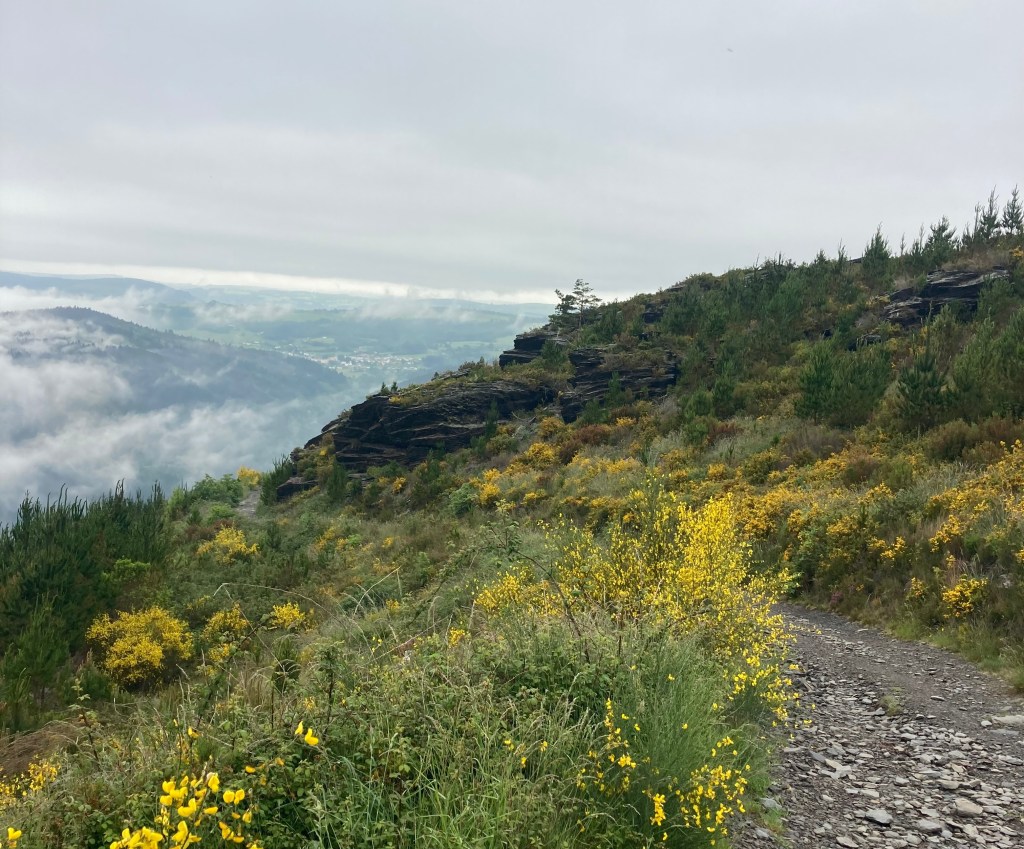
The next day dawned sunny and clear, picture perfect conditions for ascending the Hospitales Route. This section is a highlight of the Primitivo, taking you up into the clouds, away from civilization and into the beauty of the mountains. The day is a little challenging, with a total elevation gain of about 1161 m (3,809 ft) and an elevation loss of 868 (2,848 ft). Expect some steep climbs and descents, and to break out those hiking poles. There are also plenty of opportunities for scenic snack breaks along the way.

This exposed ridge offers some of the most beautiful scenery of the Primitivo, but also little to no services. You’ll want to ensure you stock up with food and water in Borres, as there are no coffee stops or shops until you reach Berducedo at the end of the day. I would recommend booking at a private albergue in Berducedo for the night if you can. Everything was full when my friend and I arrived, including the public albergue, so we continued on a further 4.4 km to La Mesa. This made for a very long (but oh so stunning) day with over 30 km of walking.
Day 5: La Mesa to Grandas de Salime (16 km)

Next up is another unbelievably scenic day on the Primitivo. You’ll start with a short but sweaty and steep ascent out of La Mesa, followed by an incredibly long descent down forest switchbacks to the Salime dam. You can stop at the cafe up the road to soak in the views with a café con leche. (And to catch your breath!)
From here, you’ll walk uphill along a winding paved road all the way to Grandas de Salime, one of the cutest little towns on the route. I was a little stressed this day, as everywhere was booked up in town for the night. My only option was the public albergue, which was first come, first serve with 28 beds. I don’t like bed races on the Camino, and I definitely don’t like feeling rushed. Luckily, I arrived early enough and there were still plenty of spots left. Phew!
A friend and I went to check out the town and ended up at this little gem of a cafe down the street from the albergue. It was the best place to rest and kick back, with cake, tea, and red wine at our fingertips.
Day 6: Grandas de Salime to A Fonsagrada (25.2 km)
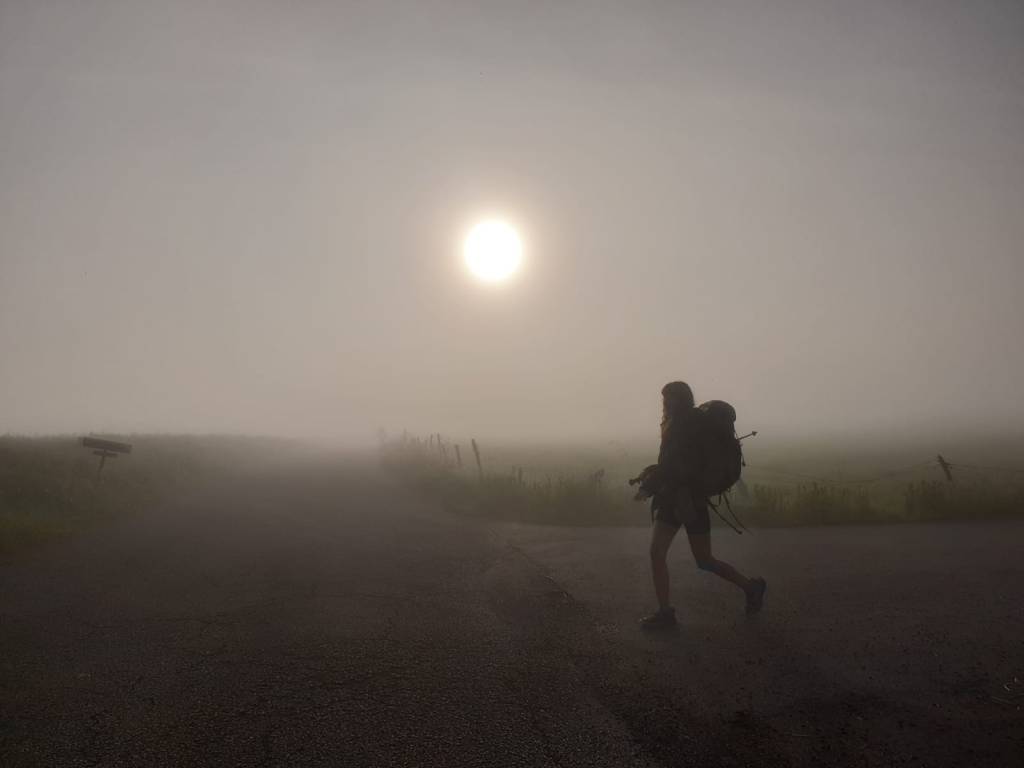
From Grandas de Salime, the Primitivo will take you through more beautiful trails, with mountain views, serene forested paths, and some ups and downs. My friend that I’d been walking with much of the time stayed an extra day in Grandas to rest, so I set off alone. The events of the day included almost forgetting my phone at a roadside bar, and trying some crow yoga poses at the top of the hill.
Later on, I happened upon a friendly pair of pilgrims, including an old Englishman and a young Irishman having a spirited conversation. They welcomed me into their conversation, and I walked with them into the town of Fonsagrada, which involved surviving some unkindly steep hills. We were a little out of breath when we arrived into town, but somehow all made it to our respective albergues in one piece.
If you have the energy, I would recommend stocking up on groceries in town, and then going a kilometer out of town to the camping spot to stay the night.
Day 7: A Fonsagrada to O Cádavo (24.3 km)
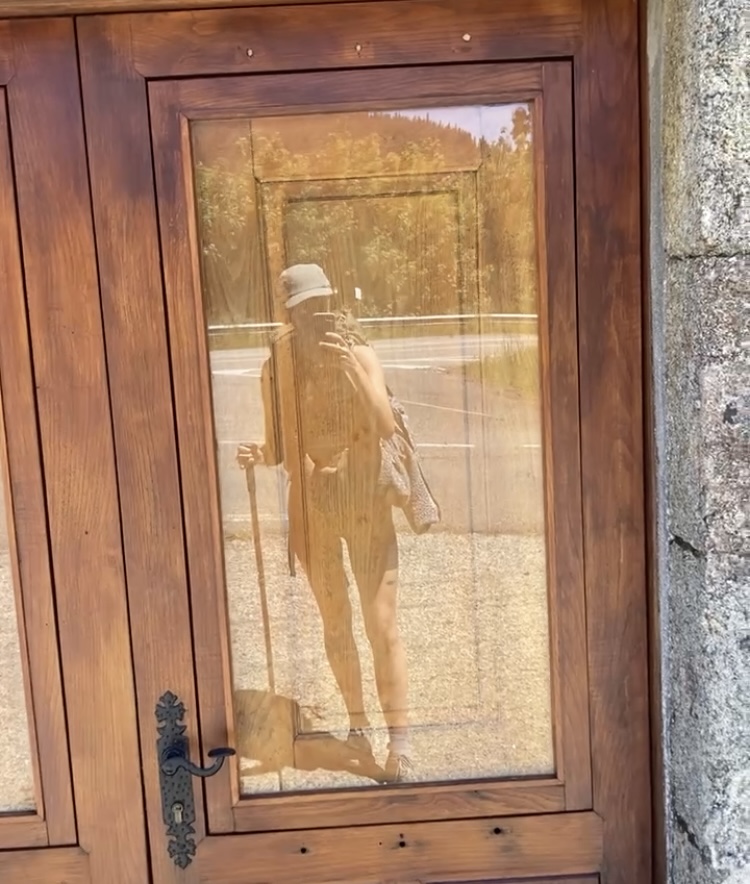
The next day offers some more beautiful Primitivo scenery, with green forest, ascents, road walking, and a few bars scattered along the way. There’s a particularly nice cafe to stop at for lunch, about halfway. There, you’ll find friendly people, yummy snacks, orange juice, and of course, coffee. Many pilgrims gathered here for a chat before braving the highest climb of the day.
O Cádavo isn’t a particularly picturesque town, but there’s a couple albergues and restaurants here that will let you rest up before beginning the next chapter towards Lugo.
Day 8: O Cádavo to Vilar de Cas (13.9 km)

While many people choose to walk straight from O Cádavo to Lugo, there’s a truly amazing albergue about halfway between the two that’s worth stopping for and taking a shorter day. With hammocks, a lively bar and cafe area, and unique rustic architecture that looks straight out of Architecural Digest magazine, you can feel the care that went into every inch of A Pociña de Muñiz the moment you arrive.
We had a lot of fun kicking back in the hammocks here and enjoying some snacks and drinks. The dinner, although it cost extra, was a great way to sample some local foods and meet friendly pilgrims.
Day 9: Vilar de Cas to Lugo (15.6 km)

Today’s the day you’ll come fully back into civilization by arriving to Lugo, a walled city that preserves the remains of its Roman past. It’s a UNESCO World Heritage Site, and many pilgrims choose to take a rest day here to explore its fascinating nooks and crannies. The walk in to Lugo from Vilar de Cas was quite gentle, with beautiful trees and greenery.
Since I wasn’t walking so far, I arrived early to the public albergue and had plenty of time to walk around the old city walls, take in the views, check out the cathedral, and eat some ramen with a friend. There are a couple nice cafes, shops, and charming squares in Lugo, so you could easily spend more time here!
Day 10: Lugo to As Seixas (32.1 km)

From Lugo, you’ll head out of the city and back into the countryside, making your way through several small towns and historic churches. Most people stop in Ferreira, which is about 26 km in total, but I opted to continue on to As Seixas, off the official Gronze stages. This last stretch was not pleasant, as it was mostly road walking and boring views, but worth pushing through.
If you have a little extra gas in the tank, I would say to stop in As Seixas. The public albergue was one of the most relaxing and serene places I’ve stayed at, with a big grassy field, and only 10 EUR for the night. While there are no supermarkets, there’s a cafe next door that serves dinner and vending machines with a wide range of snacks and drinks. I still remember laying on a sunny bench, eating my ice cream and resting my tired feet after a long day. It was pure bliss.
Day 11: As Seixas to Arzúa (28.5 km)

It’s time to say goodbye Primitivo, hello Francés. You’re not crying, I’m crying. Today is the day you’ll connect with the main Camino route (and millions of pilgrims, cafes, and noise). I guess this is to be expected when you’re so close to Santiago. The good news is, that once you’re on the Francés, there are so many services and albergues that you can easily stop or keep walking whenever you feel like it. And you definitely won’t get lost from here.
After a peaceful morning spent drinking in some quiet forest and mountain views, I descended down into Melide and merged onto the Camino Francés. Keeping my trusty walking stick close, I started to get used to walking with so many people around on the wide, well-worn path. The day ended at the Arzúa public albergue, a busy town with plenty of stores and restaurants. Tonight I went to bed early, knowing tomorrow would be a long (and exciting) journey into Santiago.
Day 12: Arzúa to Santiago de Compostela (38.7 km)
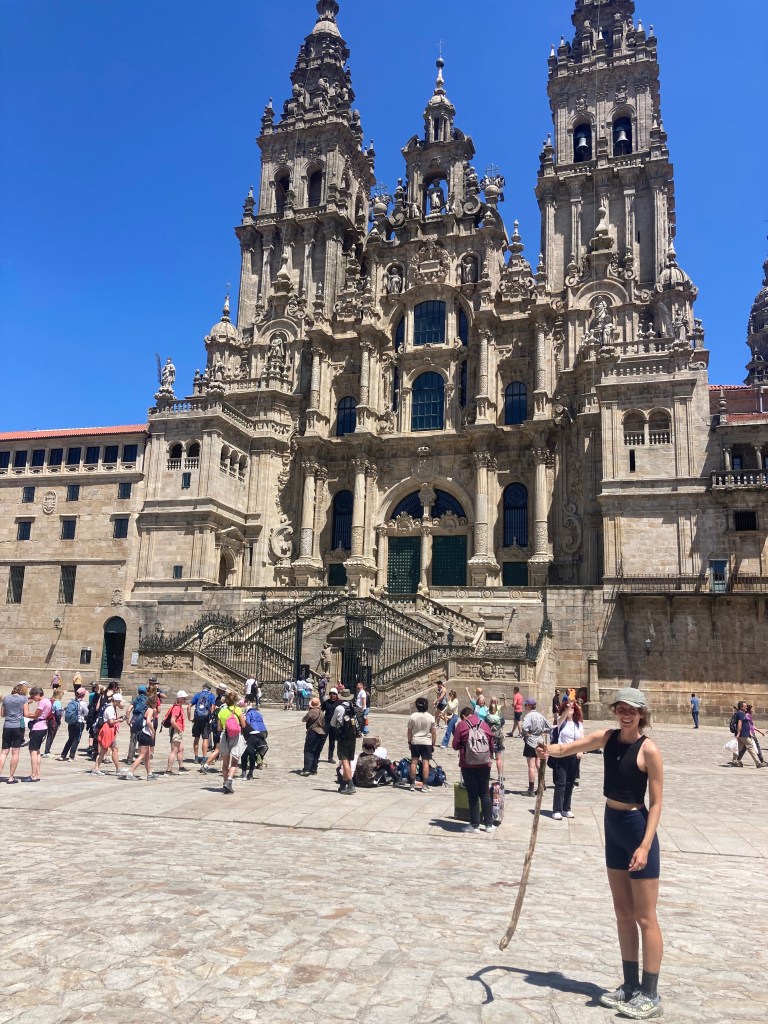
Hurrah! The last day has arrived, and Santiago is in sight! This was my longest day by far, and it was hot. However, the route is pretty flat and the excitement of pilgrims walking all around will help carry you forward, should you choose to make the final push to Santiago from Arzúa. It’s also possible to break up the day into two by spending the night in O Pedrouzo.
My last day was filled with that special magic so characteristic of the Camino. One of the nicest moments happened while walking into town, with the cathedral almost in sight. My walking buddy and I couldn’t stop talking about how much we wanted ice cream. It was our main topic of conversation for probably about 5 kilometers. So, we were beyond excited to catch sight of an ice cream shop up ahead of us. However, getting closer, we could see it was closed. Tears! Alas! But, just as we were walking past with all hope gone, a woman came up and opened the front gate, welcoming us into the shop. Was it open? We weren’t quite sure. She greeted us with a big, friendly smile and said yes, we’re open. I think it was the best ice cream I’ve ever had.

From there, we almost glided into Plaza del Obradoiro, falling down in front of the cathedral with equal parts exhaustion and happiness. Even though this was the third Camino I had walked within the space of a year, I felt so happy and light, so grateful to have had the adventure. Soon, people we had met along the way were walking up to us and saying hi, and it was time for a final dinner, to bring our bags up to the monastery where we’d sleep for the night. Finally, it was time to rest.
Hopefully this itinerary has helped inspire you to plan your own Camino Primitivo walk. You can do it! For more tips on packing and all things Camino, check out this Norte guide and packing list.

 Home Far Away From Home
Leave a comment